

Chromebooks have become extremely popular for browser-based use cases, such as online learning. You can get some of the best Chromebooks at prices lower than competing Windows laptops. But one of the primary arguments against Windows laptops is how easy it is for them to get infected with viruses and malware if you are not careful. So, a similar question also pops up for Chrome OS: Can Chromebooks get viruses? Can they get malware? And what precautions should one take to protect your Chromebook against them? We answer these questions and more in this article.
Can a Chromebook get a virus?

Rita El Khoury / Android Authority
What is a virus?
Are Chromebooks safe from viruses?
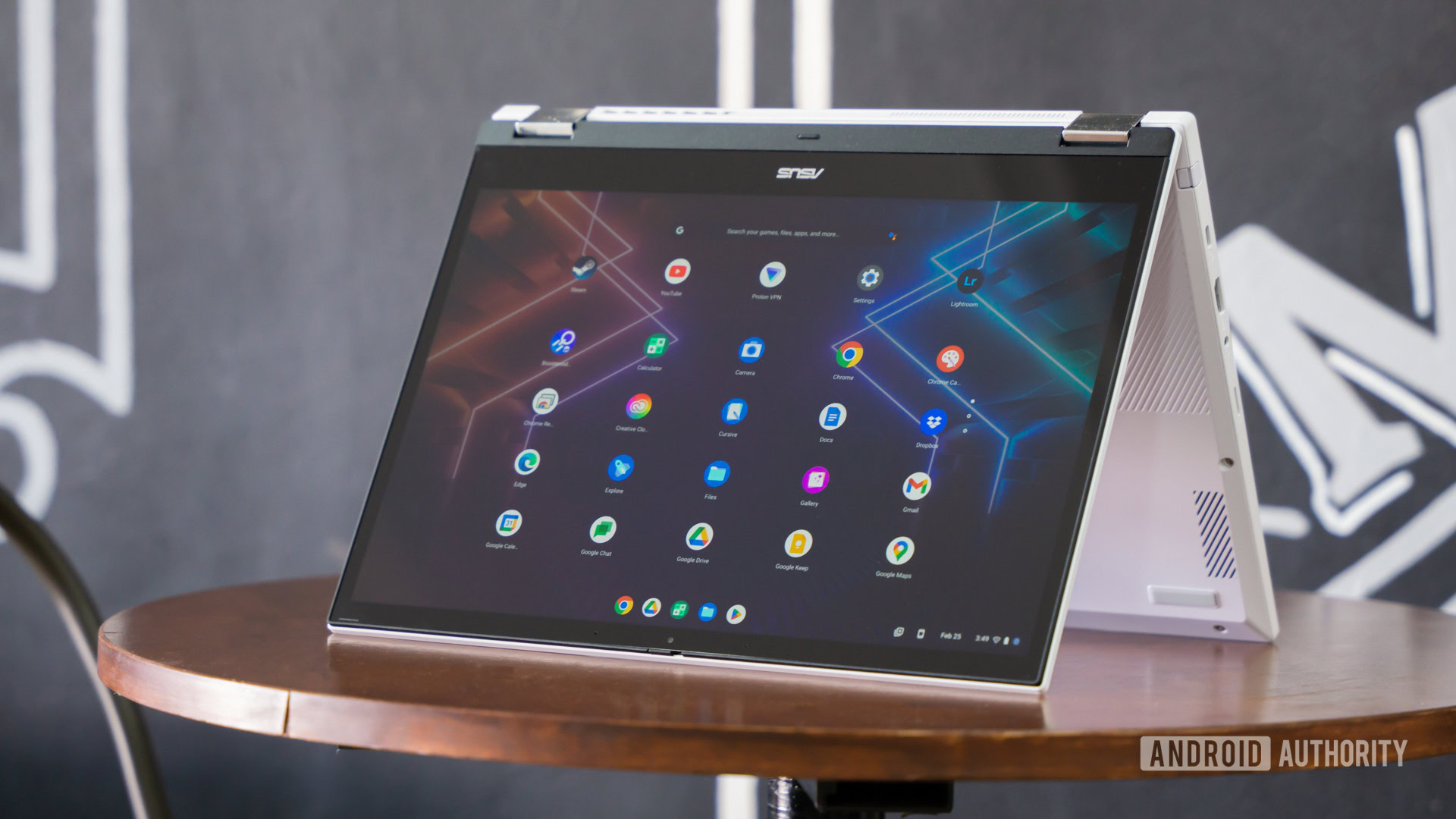
Edgar Cervantes / Android Authority
Do you need an antivirus for your Chromebook?

Rita El Khoury / Android Authority
How does Google protect Chromebooks from malware?
- Automatic Updates: Google frequently rolls out software updates that contain the latest security fixes. Chromebooks manage updates automatically, so every supported Chromebook is always running the latest and most secure version of Chrome OS.
- Sandboxing: As mentioned earlier, each web page and application on Chrome OS runs in a restricted environment called a sandbox. If a Chromebook is directed to an infected page or app, it cannot affect the other tabs or apps on the computer.
- Verified Boot: Every time a Chromebook starts up, it does a self-check. If any system tampering or corruption is detected, the OS will attempt to repair itself and boot back to a new state.
- Data Encryption: Chromebooks encrypt locally stored user data using tamper-resistant hardware.
- Recovery Mode: Chromebooks also include a recovery mode that lets you quickly restore the operating system to a known good version in case something does happen to the system.
How to keep your Chromebook safe from malicious software
Edgar Cervantes / Android Authority- Keep your Chromebook updated: Google frequently rolls out updates for Chromebooks, and it is in your best interest to install the latest update as soon as possible.
- Use Enhanced Protection and Secure Connections:
- Navigate to Settings > Privacy and Security and enable Enhanced Protection. This allows Chrome OS to protect you from malicious websites, extensions, and downloads with stricter definitions.
- On the same page, you will also see Always use secure connections, which forces HTTPS wherever possible and warns you before loading websites that don’t support it. Please enable it.
- Do not install suspicious apps and extensions: If an app or extension appears suspicious, do not install it. You should pay attention to the store listing, the icon, the name of the publisher, the number of installations displayed on the listing, the overall app rating, and the permissions the app requests. If a few of these appear out of the ordinary, it would be prudent to look for alternatives or double-check for legitimacy.
- Avoid third-party app stores: Google Play Store does a decent job of maintaining the quality of apps and ensuring malware does not spread quickly. Other app stores may be unable to make such promises, and thus, it is advisable to stick to the Google Play Store only for your needs.
- Avoid enabling Developer mode: Developer mode lets you access many valuable features, but there’s a reason why those features are gated behind an additional layer of toggles. These features do open up pathways for malicious actors and, hence, are advised for use by developers only.
- Use common sense: This advice is not specific to Chromebooks but applies to the broader internet. If you come across a proposition that sounds too good to be true, it isn’t. If an app or service that should ordinarily be paid suddenly becomes free and with a great deal, then something fishy might be going on. With this simple advice, you can protect yourself from the vast majority of scams on the web.
